Camping Fridges for DIY Glamping and Comfortable Tent Camping
No ice. No meltwater. No wondering how long dinner has been swimming.
No ice. No meltwater. No wondering how long dinner has been swimming.
A powered fridge is one of the things that makes our tent setup feel more like a glampout. Food stays cold and dry without buying ice, draining meltwater, or digging through a cooler full of water.
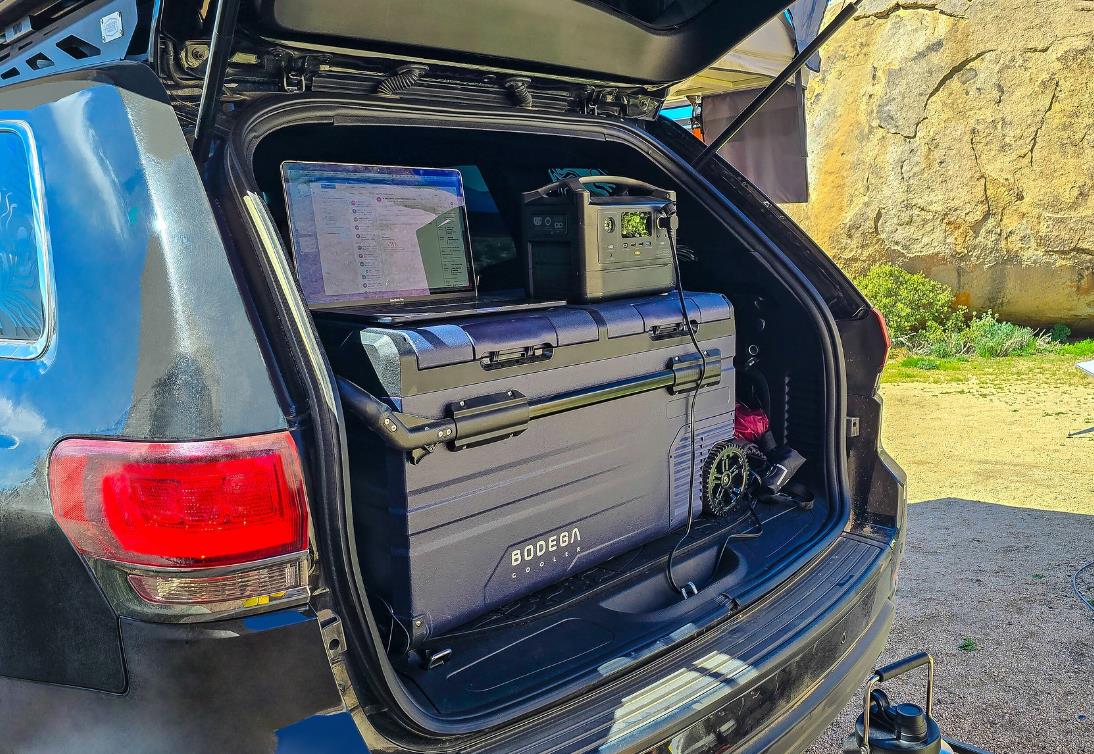
We run the fridge from vehicle power while driving, a portable power station for short periods away from hookups, and campground pedestal power overnight when electricity is available.
Food stays cold and dry without buying ice, draining meltwater, or losing cooler space to ice bags.
Use vehicle power while driving, a portable power station for short periods away from hookups, and campground pedestal power overnight when electricity is available.
A small fridge works for lighter trips; larger dual-zone models give you more refrigerator and freezer space.
We keep the fridge locked in the car overnight and run an extension cord from the campground pedestal through a nearly closed window. The window closes snugly around the cord, tight enough to keep rain out, while the fridge stays secure inside the vehicle.
We recommend buying direct from BODEGA's own site: you deal directly with the manufacturer for your order, shipping, and support, with no reseller in between. BODEGA runs sales often, so it's worth checking their site directly for current pricing and any active promotions. You can also compare current listings on Amazon below.
| Model | Capacity | Best For |
|---|---|---|
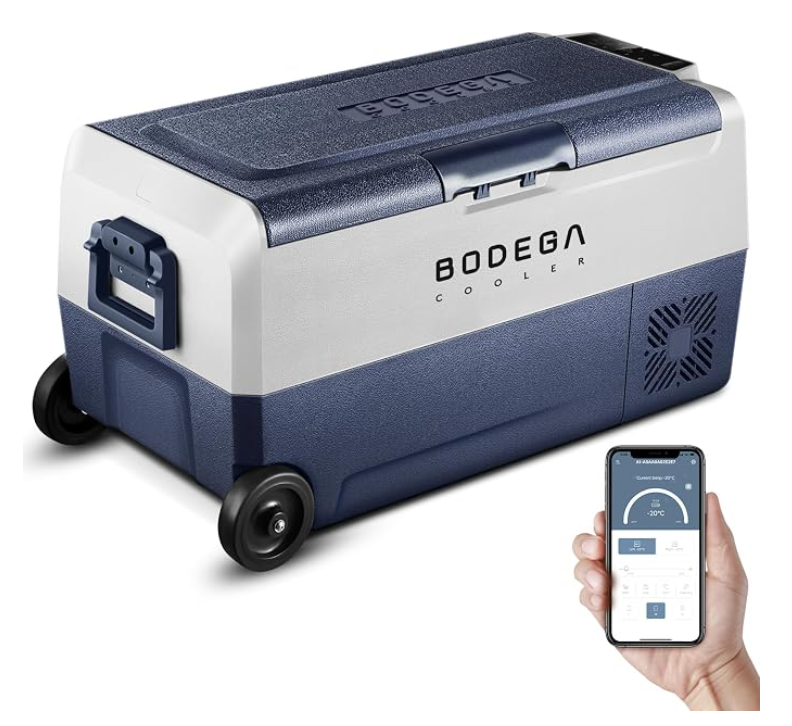
| T36 (We Use This One) | 38QT / 36L, dual-zone | Everyday camp fridge with wheels and compressor cooling |
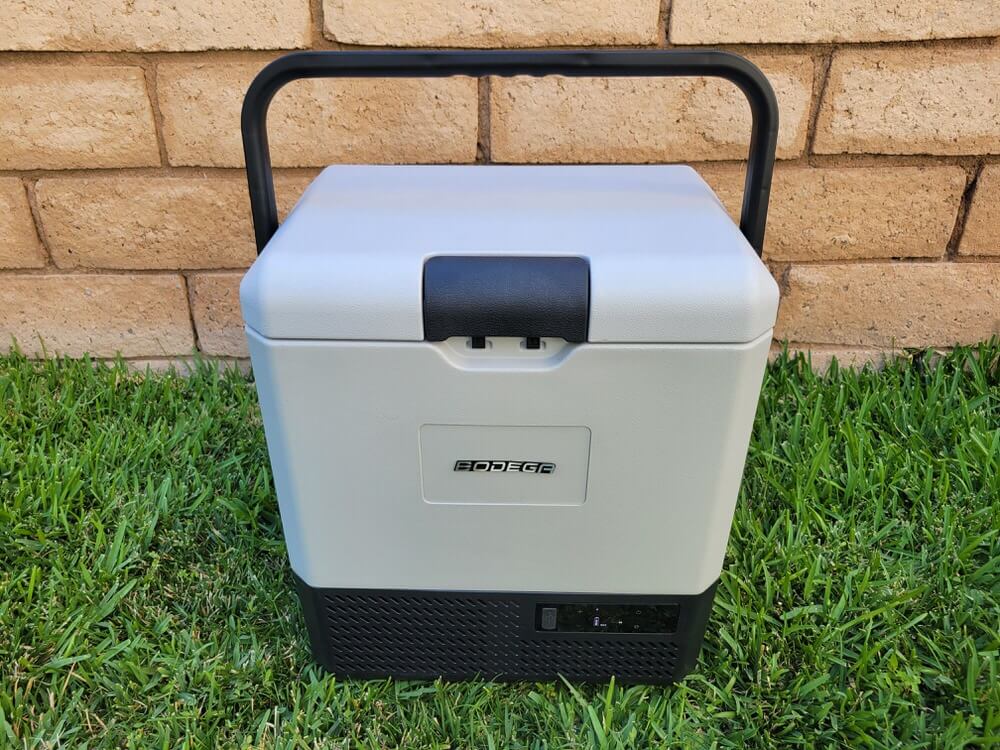
| P15 Mini | 16QT / 15L | Most portable option when space is tight |
| T50 | 53QT / 50L, dual-zone, flexible | Longer trips needing more cold storage |
| TWW75 | 80QT / 75L, dual-zone | Larger groups or extended stays |
Our T36 is part of the same setup as our camp kitchen and portable power station.
Power draw varies by temperature setting, ambient heat, and fridge size, so check the specific model's spec sheet for its exact amp-hour draw. Size your power source (vehicle, portable power station, or campground hookup) around that number rather than guessing.
Running a fridge off a vehicle's battery while the engine runs is generally fine. Doing it while parked, without a dual-battery setup or battery isolator, risks draining the battery you need to start the vehicle. See our portable power station guide for parked-vehicle-safe alternatives.
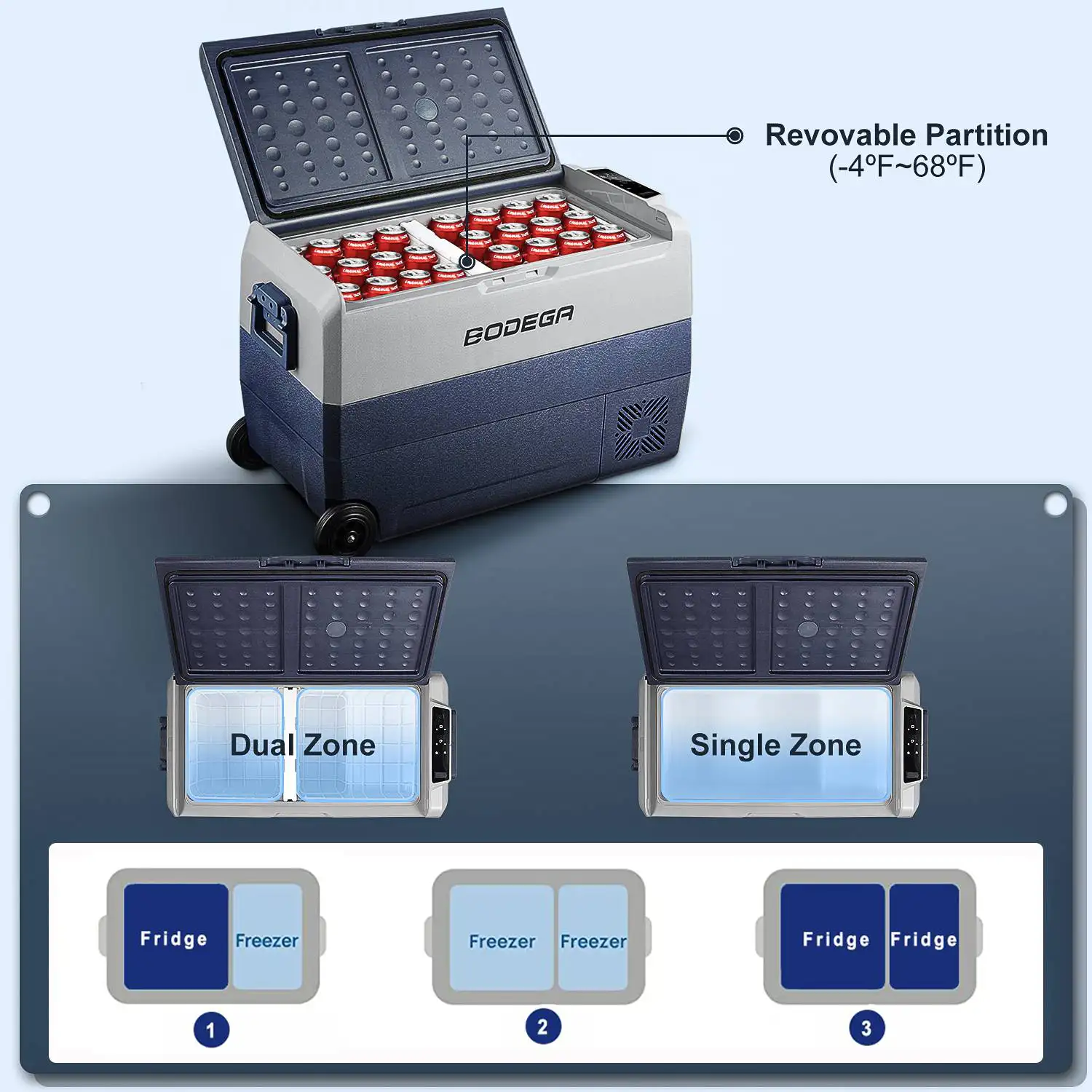
A dual-zone fridge/freezer lets one compartment stay refrigerated while the other freezes, so you can separate fresh and frozen food. A single-zone unit maintains only one temperature throughout.
Not always. Running the fridge from your vehicle while driving or from a campground's pedestal power covers many trips. A portable power station matters most when you need cold storage away from both of those for an extended period.
Not necessarily. A larger dual-zone model holds more, but it's heavier, costs more to run, and takes up more space. Match the size to how many people you're feeding and how long you'll be off-grid before restocking.
Glampabout © Walkabout Travel Gear. As an Amazon Associate and through other affiliate programs, we may earn a commission from qualifying purchases.