Camping Toilets, Portable Urinals, and Showers
A real bathroom setup for tent camping, from the toilet to the washbasin.
A real bathroom setup for tent camping, from the toilet to the washbasin.
A camp bathroom is one of the first things that separates comfortable tent camping from a plain one. Skip the RV, skip the paid glampsite, and build your own setup instead: a toilet you can trust, a privacy tent for changing or showering, and something fast for the middle of the night.
It's all reusable gear that travels with us to regular campgrounds, so we're not stuck relying on whatever bathroom happens to be nearby.
Modiwell's dry-flush toilets skip water and chemicals entirely. Pull the handle and each use seals into its own liner, so there's no black tank and no bucket to deal with afterward. Both models ship free to the US, Canada, and Australia, with an 18-month warranty.
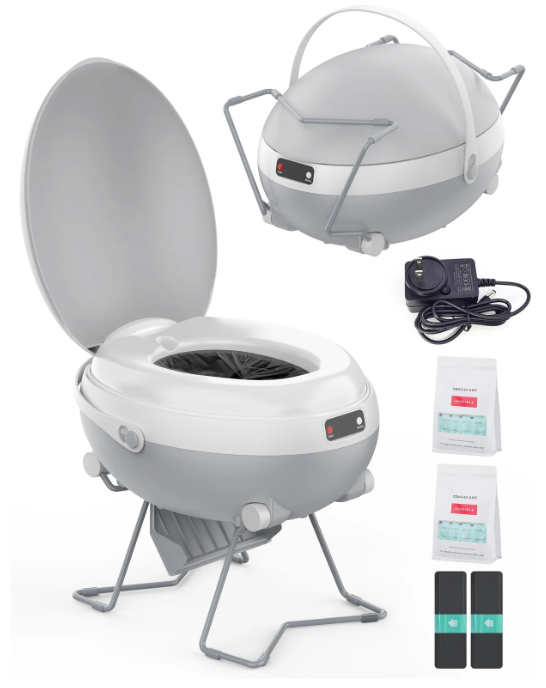
Egg-shaped and built with a carry handle, it folds down to about 12 inches for storage. Roughly 100 uses per charge, 17 lb, and rated to hold up to 330 lb.
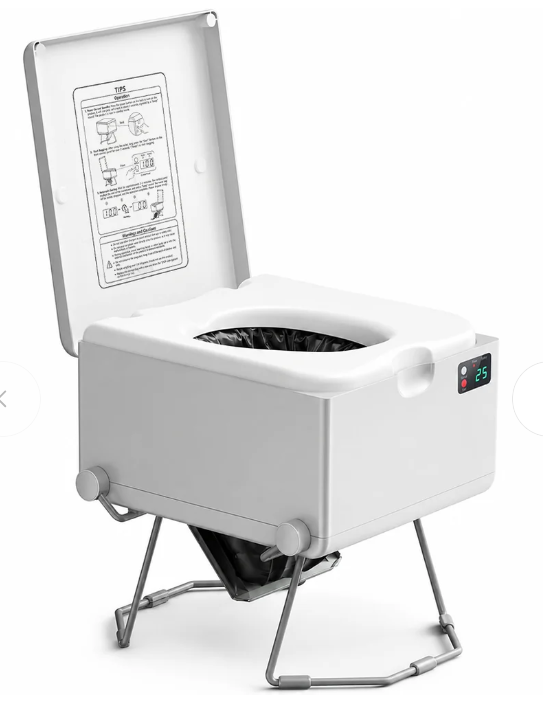
The legs fold flat, bringing it down to under 11 inches for storage. Good for 70 to 100 uses per charge, weighs 16.5 lb, and takes an optional 12V adapter.
No batteries, no liners to buy. Simpler gear if a dry-flush system is more than you need.
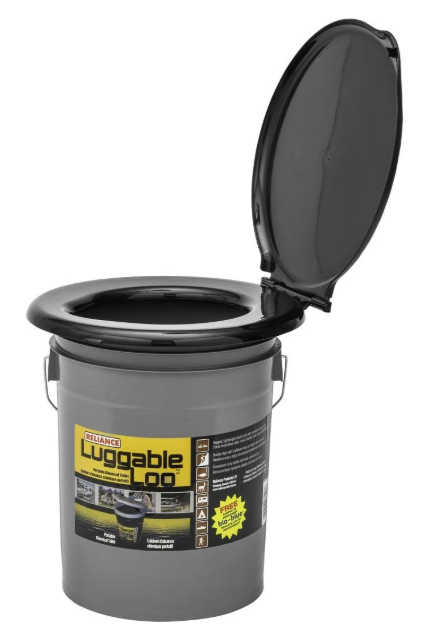
A straightforward 5-gallon bucket toilet with a real seat and lid, for when a urinal isn't enough.
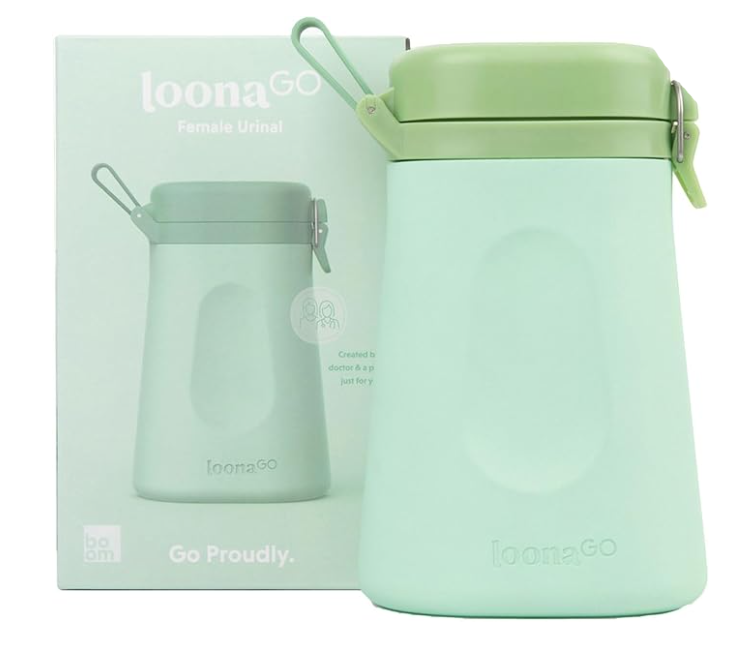
Our go-to for a quick nighttime trip instead of walking to the bathhouse in the dark.
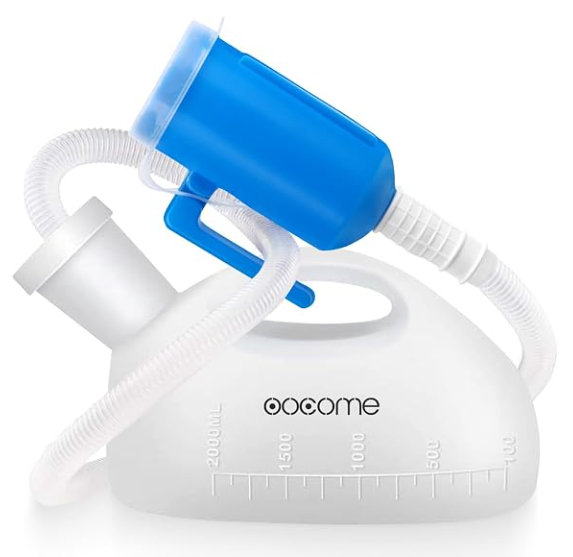
A reusable bottle with a lid and a long tube, built for the same middle-of-the-night runs.
Whichever toilet you pick, a privacy tent is what actually makes it usable at a shared or open campsite.
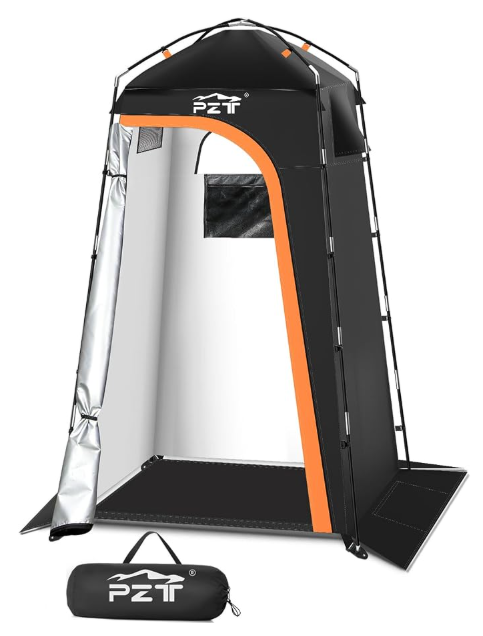
One tent, three jobs: covers the toilet, doubles as a changing room, and works for a camp shower too.
This is where a portable urinal earns its keep. No stumbling across a dark campground at 2am, and the toilet and privacy tent can stay set up outside the sleeping area instead of inside it.
The privacy tent gives the whole bathroom setup its own space, away from the rest of camp. We pair it with the portable toilet, but it works just as well as a changing room or a shower stall.
Where you put it matters: keep the bathroom area out of the main walking path, but still convenient. See How to Set Up Your Own Glamp Campsite for the rest of the layout.
On longer trips, a portable camping shower makes a real difference when the campground showers are far away or not available at all. Set it up inside the privacy tent and it works like any other outdoor shower.
Handwashing doesn't need much: water, soap, a towel, and either a basin or a small portable station. Keep it near the rest of the bathroom setup so it actually gets used.
Different styles and price points if the Luggable Loo or Modiwell toilets above aren't quite right.
More privacy tent options sized for a toilet, a changing area, or a shower.
More shower options for longer stays or campgrounds without easy access to one.
More handwashing setups for keeping water, soap, and cleanup in one place.
Bucket-style toilets like the Luggable Loo use waste bags that get sealed and thrown away in a campground dumpster, or packed out if there isn't one. Rules vary by campground, so it's worth checking before you go. Dry-flush toilets like the Modiwell models work the same way, sealing each use into its own liner.
A portable urinal like the LoonaGo or OOCOME is small and reusable, mainly meant for nighttime trips or saving a walk to the bathroom. A portable toilet, whether it's a bucket-style Luggable Loo or a dry-flush Modiwell, is built for regular use throughout the trip, not just quick stops.
Not strictly, but it helps a lot at open or exposed campsites, or any time you're sharing a site with others. It also works as a changing area or shower stall, so one tent covers more than one job.
Yes. A portable camping shower, whether it's a gravity-fed bag or a small pump unit, works fine inside a privacy tent for a quick rinse-off, even away from the campground's own shower building.
Glampabout © Walkabout Travel Gear. As an Amazon Associate and through other affiliate programs, we may earn a commission from qualifying purchases.