Portable Power Stations for DIY Glamping and Comfortable Tent Camping
No RV. No generator noise. No dead batteries when you need them most.
No RV. No generator noise. No dead batteries when you need them most.
Power is part of the reusable comfort system that makes Glampabouting work. It lets you skip the RV, skip paying for a furnished glampsite, or simply upgrade the tent camping you already do.
A portable power station gives a normal tent campsite useful electricity without hauling along an RV or a generator. Smaller power stations are not suitable for high-wattage equipment such as electric heaters, kettles, hot plates, or hair dryers; what you can run depends on the station's rated output. Camping at a site with electricity? See our guide to campground electric hookups.
Keep phones, lights, fans, and other electronics charged all trip long without hunting for an outlet.
Charge from your vehicle while driving, campground power when it's available, or a solar panel to stay charged off-grid.
A compact unit covers small electronics; bigger units handle a fridge, fan, and more all at once.
Top off your power station from the car's 12V outlet or an AC charger while you drive to camp, so you start with a full charge before you ever need solar or campground power. Match a solar panel's output to the station's rated solar input. Once you reach the station's maximum solar input, additional panel wattage will not make it charge faster.
We recommend buying direct from BLUETTI's own site: you deal directly with the manufacturer for your order, shipping, and support, with no reseller in between. You can also compare current listings on Amazon below.
| Model | Output | Capacity | Best For |
|---|---|---|---|
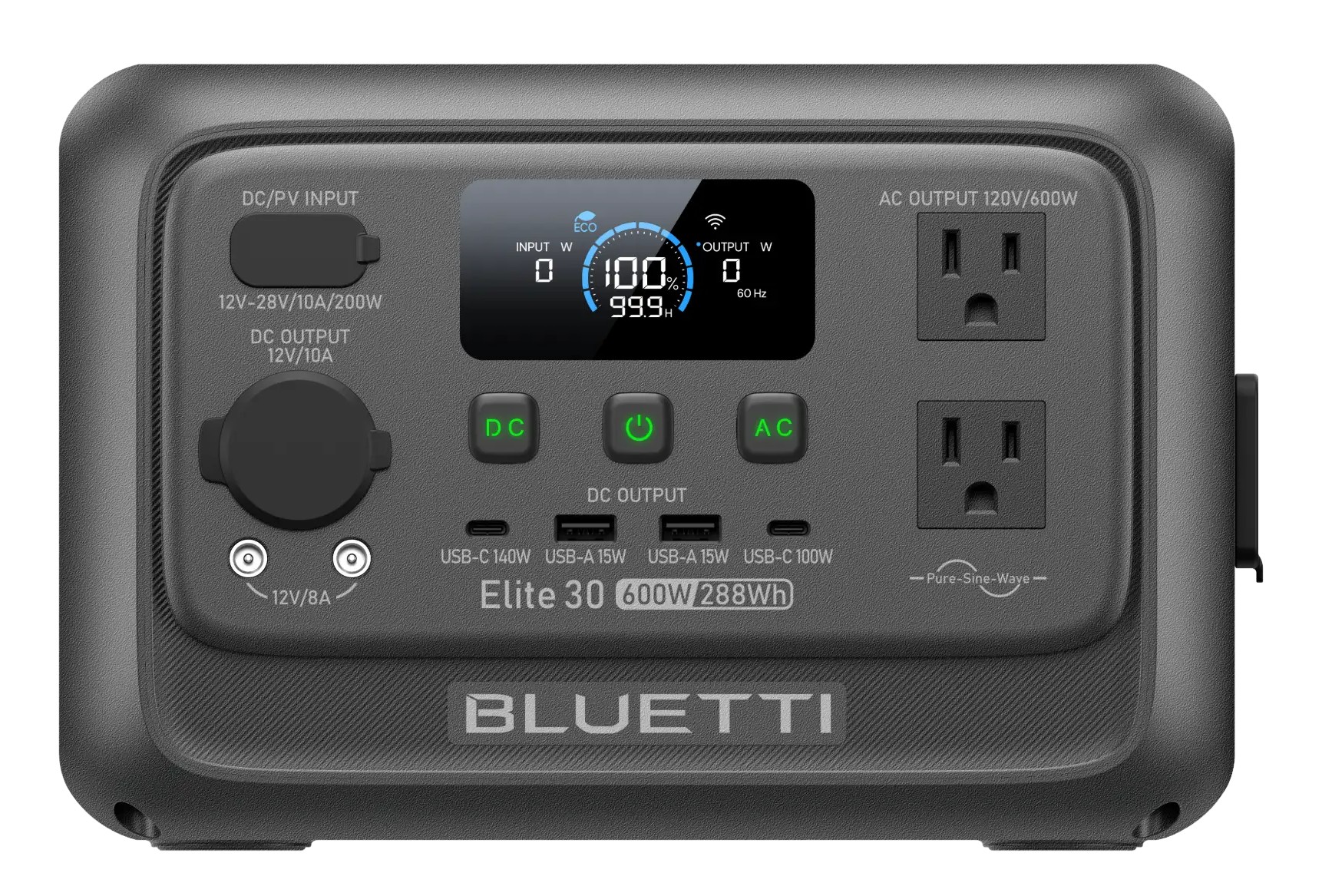
| Elite 30 V2 (Our Pick) | 600W | 288Wh | Everyday camp power in a compact, lightweight unit |
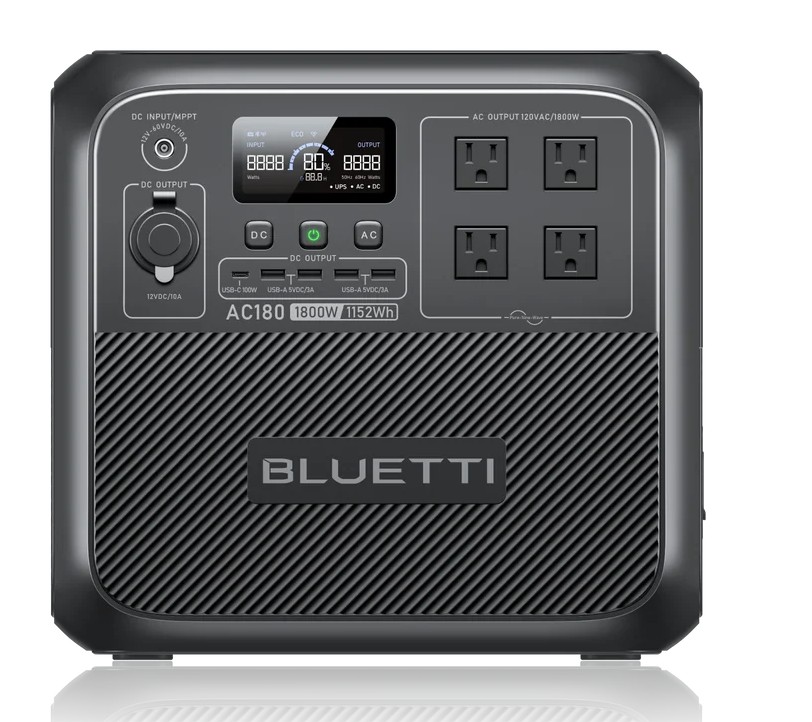
| AC180 | 1,800W | 1,152Wh | Bigger essentials like a mini fridge or laptop charging |
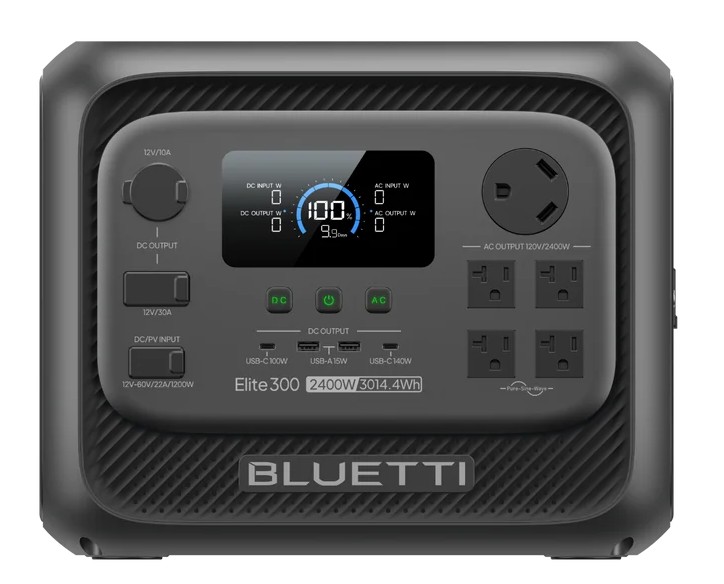
| Elite 300 | 2,400W | 3,014Wh | Longer stays and more camp gear running at once |
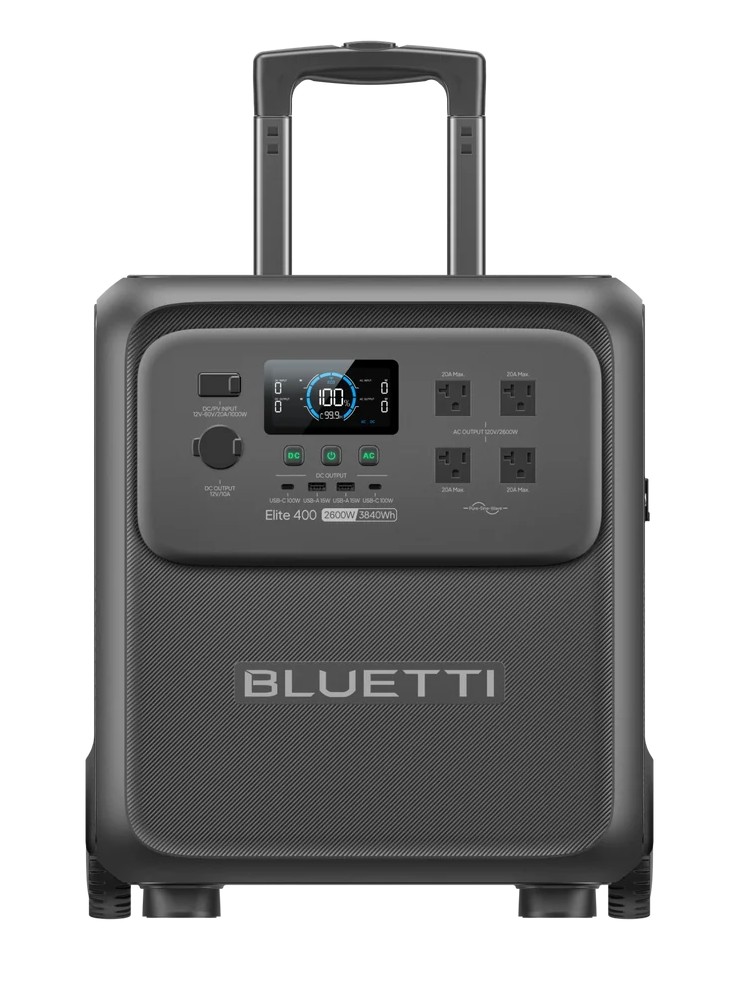
| Elite 400 | 2,600W | 3,840Wh | Larger loads and the longest runtimes |
| 200W Solar Panel | N/A | N/A | Off-grid recharging for any station above |
Our Elite 30 V2 is part of the same setup as our camp kitchen and camping fridge.
A portable solar panel can recharge a compatible power station when you are away from campground electricity. The BLUETTI 200W Portable Solar Panel is a practical portable option for the smaller power stations above. Larger-capacity stations may benefit from higher solar input when faster off-grid recharging is important.
Many CPAP machines draw well under 100W without a humidifier, which fits comfortably within these stations' output ratings. Check your CPAP's wattage label and compare it against the output and capacity figures in the table above before relying on it overnight.
Yes. Unlike a gas generator, a battery power station doesn't burn fuel or produce exhaust fumes, so it carries none of the carbon-monoxide risk that keeps generators outside. It also runs silently.
It depends on what's plugged in and for how long. A phone charger draws only a few watts, while a fan or mini fridge runs continuously and adds up fast. Match the combined wattage of what you plan to run against the capacity (Wh) figures in the comparison table above before choosing a size.
Both handle multi-day stays and extra gear. The Elite 400 steps up in output and capacity for larger loads and longer runtimes, while the Elite 300 covers most multi-day trips with somewhat less capacity. See the comparison table above for exact numbers.
Only if you will be off-grid for multiple days without a vehicle or campground power to recharge from. For weekend trips, a full charge from your car before you leave is often enough.
Glampabout © Walkabout Travel Gear. As an Amazon Associate and through other affiliate programs, we may earn a commission from qualifying purchases.