Camping Tents for DIY Glamping and Tent Camping
Our pick is an inflatable air-beam tent. Pole tents and rooftop tents are valid choices too, covered below.
Our pick is an inflatable air-beam tent. Pole tents and rooftop tents are valid choices too, covered below.
Skip the RV, skip paying for a furnished glampsite, and still get a shelter that goes up in minutes. Our pick is an inflatable air-beam tent because it goes up quickly without a bundle of tent poles and gives us enough standing room for a comfortable campsite. A traditional pole tent and a rooftop tent are both valid choices too, we cover all three below so you can pick what fits your setup. Our complete shelter setup is the tent, longer stakes, a hammer, and a ground tarp.
Our tent inflates by hand in about three minutes. The tent is standing before the rest of camp is unloaded.
Room to stand, dress, make the beds, sort gear, and move around without crawling.
Firm inflatable beams replace the pole bundle and form the tent frame.
The complete shelter setup is the tent, longer stakes, a hammer, and a tarp underneath.
For us, the main advantage is setup. The tent inflates by hand in about three minutes, and the air beams replace the pole bundle. Once it is standing, there is enough room to stand, dress, make the beds, and move around without crawling.
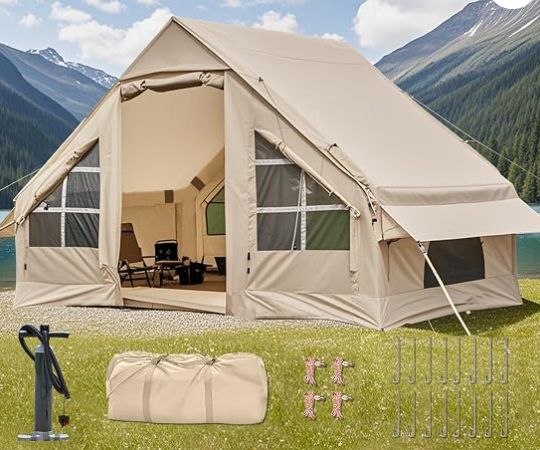
The tent we use. It inflates by hand in about three minutes, gives us standing room, and has space for the rest of the Glampabout setup.
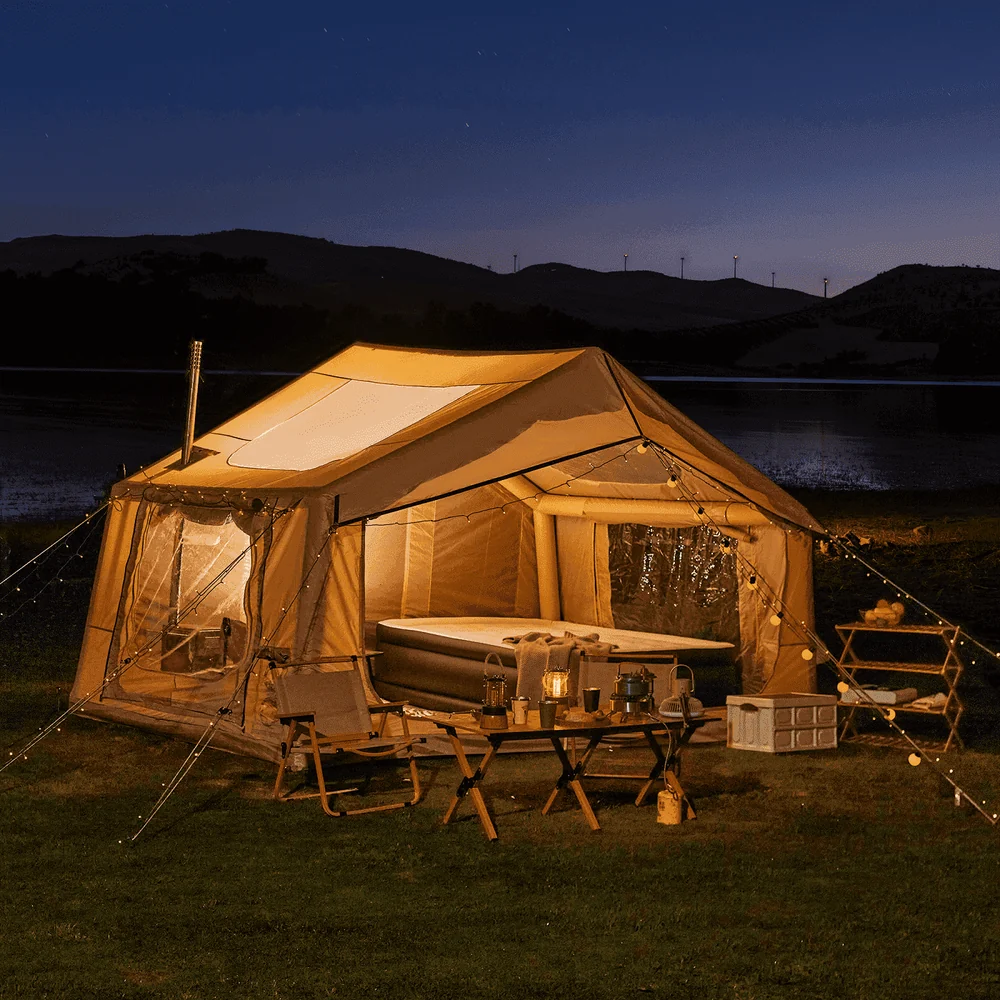
A larger inflatable tent for bigger groups. 300D Oxford fabric, 4-season rated, with a skylight, blackout curtains, and a chimney opening for a stove.
Free shipping from GeerTop to the US, Canada, UK, Australia, Japan, and several EU countries including Germany, France, Italy, and Spain.
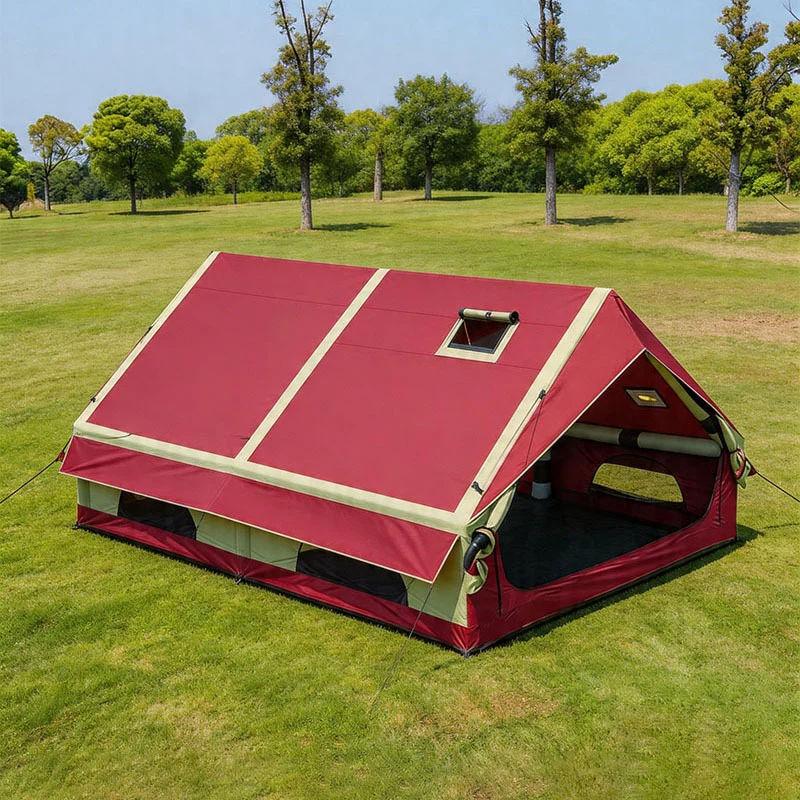
The upgrade pick for the same group size. A bigger cabin-style interior, 3000mm waterproofing on both the flysheet and groundsheet, and a 4-season rating for tougher weather.
Free shipping from GeerTop to the US, Canada, UK, Australia, Japan, and several EU countries including Germany, France, Italy, and Spain.
Browse All Inflatable Tents from GeerTop →
Browse Inflatable Tents on Amazon →

0m 0s elapsed. Inflates in about three minutes.
Tip: top off the air before zipping up for the night, cold air can soften the beams.
A traditional pole tent is still a valid choice, lower cost up front and no air pump needed.
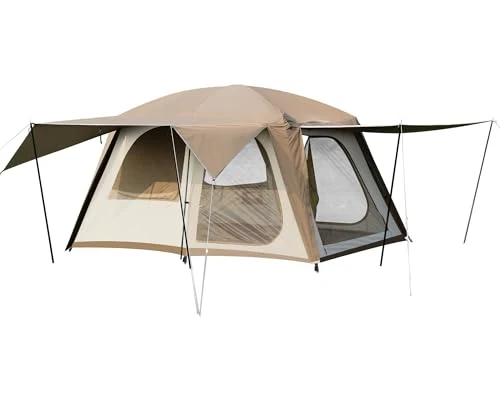
4-6 person capacity, two-room cabin design with removable curtain divider, 3-season, 1500mm PU coating, alloy steel poles, full rainfly included.
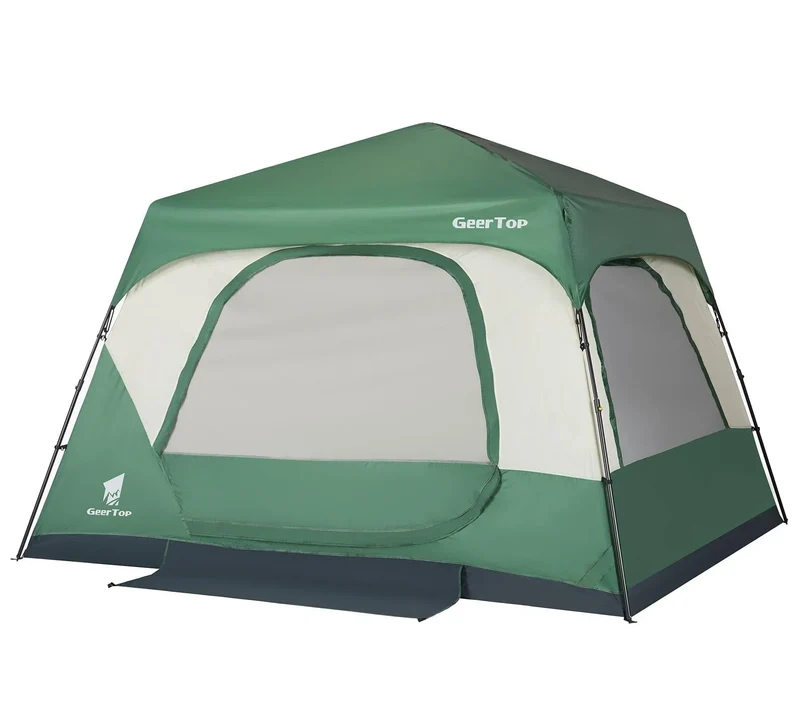
6-person capacity, instant cabin design with pre-attached poles, water-resistant with taped seams, large entrance with mesh skylight and windows.
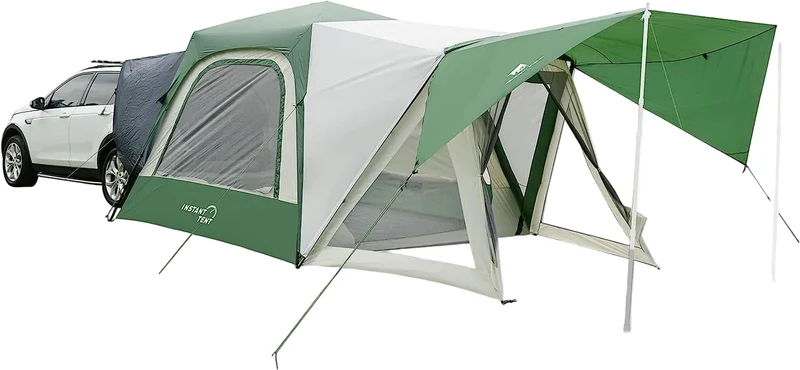
6-person capacity, instant-style pole design, double-wall construction with rainfly, large screened porch. Attaches to a vehicle or pitches on its own.
Browse All Pole Tents from GeerTop →
Browse Pole Tents on Amazon →
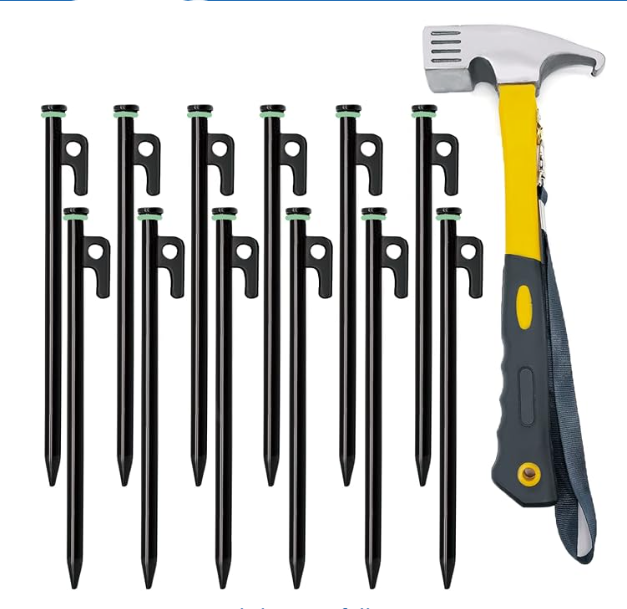
Longer stakes and a hammer give a tall comfort tent the anchoring it needs.
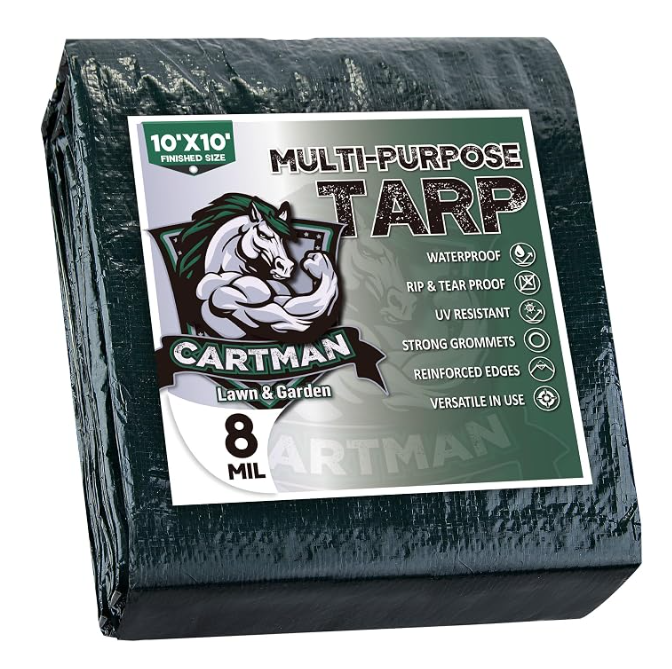
The tarp under the tent protects the floor from dirt, mud, moisture, and rough ground.
A rooftop tent mounts on a vehicle roof rack and creates a raised sleeping area off the ground.
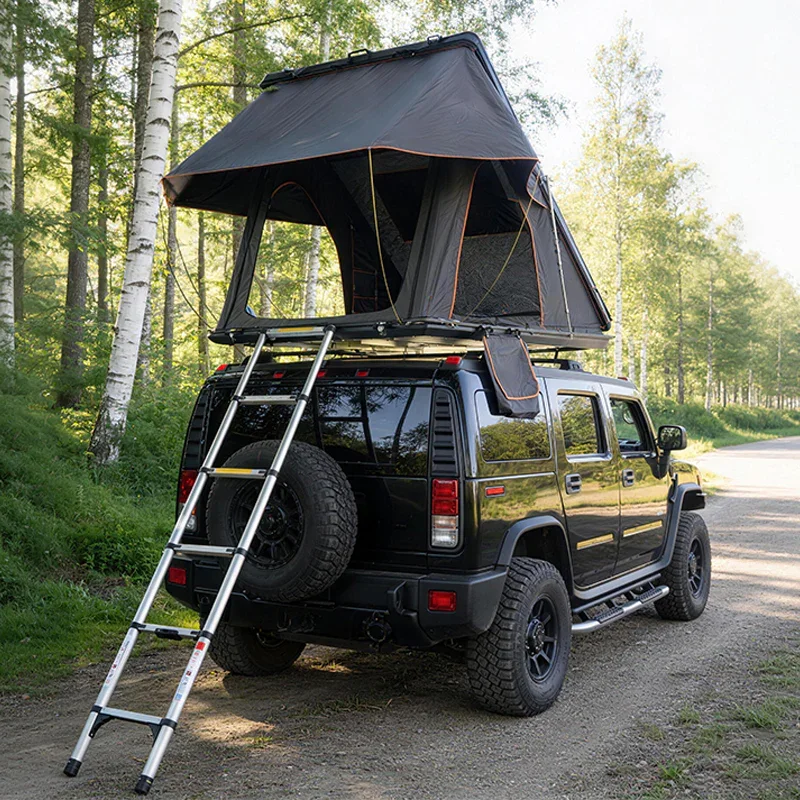
2-3 person triangular aluminum hard-shell tent. Hydraulic 3-second setup, 3000mm waterproof rating, 2.3m telescopic ladder.
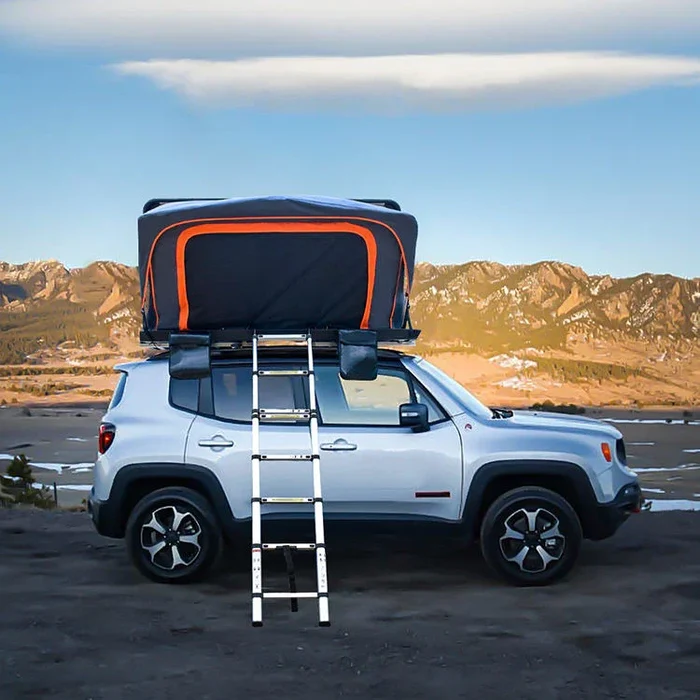
Aluminum hard-shell tent with quick automatic opening, PU 4000mm waterproofing, 4-season rated, 2.3m telescopic ladder.
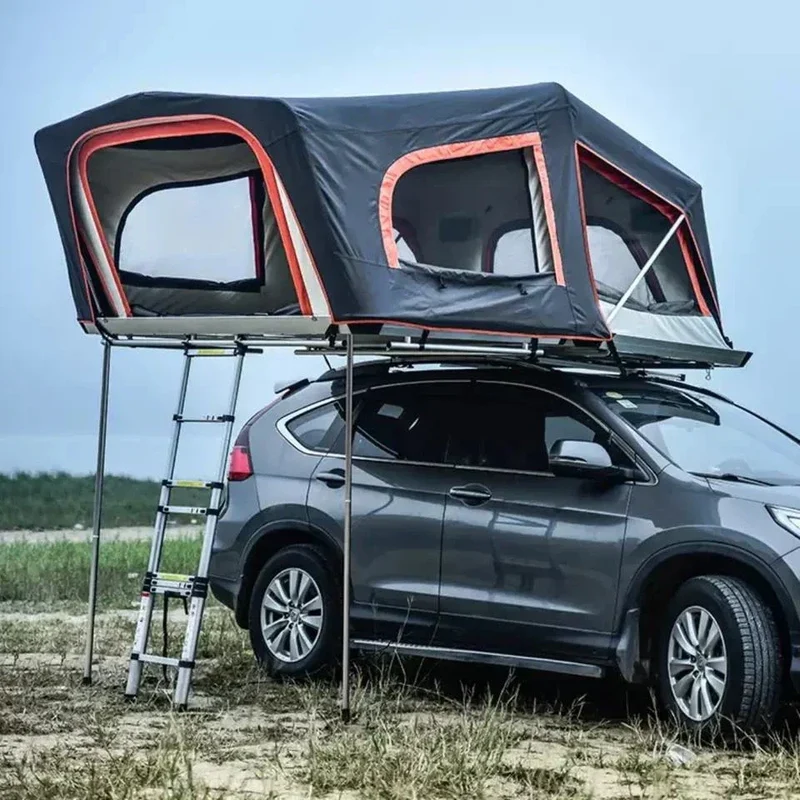
3-4 person aluminum hard-shell tent with quick automatic opening, 4-season rated, 2000-3000mm waterproofing, 2.3m telescopic ladder.
Browse All Rooftop Tents from GeerTop →
Browse Rooftop Tents on Amazon →
For the rest of our setup, see our camping beds, camp comfort gear, camping power, and campground guide.
Camping in hot weather? See How to Keep a Tent Cool.
Camping in cold weather? See How to Keep a Tent Warm.
Camping in rainy weather? See How to Keep a Tent Dry.
Inflatable sets up fastest with no pole assembly, our pick for that reason. A pole tent costs less up front and needs no air pump. A rooftop tent keeps you off the ground entirely but needs a vehicle with a rated roof rack and a bigger budget.
About three minutes by hand. The air beams replace a bundle of rigid poles, so there's nothing to assemble before inflating, just the tent itself.
Top off the air before zipping up for the night. Visual inspection isn't a reliable guide to pressure, and cold air can soften the beams. A repair kit recommended by the manufacturer handles any leaks.
Longer stakes and a hammer anchor a tall comfort tent better than the stakes it typically ships with.
A ground tarp protects the tent floor from dirt, mud, moisture, and rough ground, extending the life of the floor.
A roof rack rated for the tent's weight. Most hard-shell rooftop tents need no drilling and come with a telescopic ladder, but check your vehicle's dynamic roof load rating before buying.
Glampabout © Walkabout Travel Gear. As an Amazon Associate and through other affiliate programs, we may earn a commission from qualifying purchases.