A campground hookup lets you run the gear that makes tent camping more comfortable.
An electric campsite lets you run a refrigerator, coffee maker, toaster oven, heating pad, fan, projector, chargers, and other household-style gear. Before plugging in, know what service the campsite provides and use cords and appliances rated for it.
This guide comes from the team behind Walkabout Travel Gear, an international travel gear company since 1995. Read more about us →
Check the Site Listing
Reserve an electric site and read the details. Do not assume every electric campsite has the same receptacles or amperage.
Use Outdoor-Rated Gear
Use outdoor-rated cords and grounded connections, keep plugs away from water, and use GFCI protection outdoors.
Watch the Big Loads
Coffee makers, toaster ovens, heaters, and similar appliances can use a large share of a circuit. Do not run several high-draw appliances at once.
Keep the Power Station
Keep the portable power station even at an electric site. Charge it from the pedestal and use it for outages, off-grid stops, or power away from the campsite outlet.
Campground Electric Outlet Types
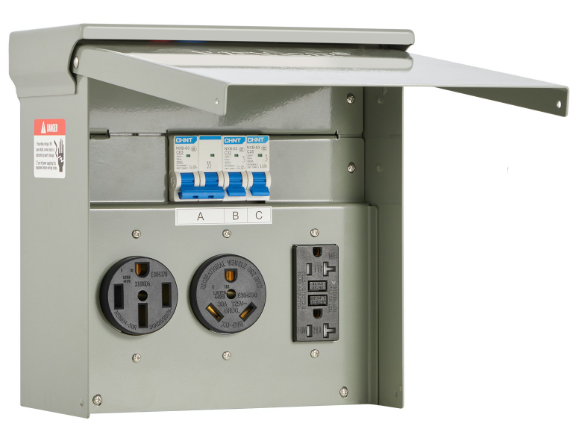
RV park pedestals commonly have a standard 120-volt 20-amp household-style outlet along with 30-amp and/or 50-amp RV service.
Tent campers use the 20-amp outlet. The 30-amp and 50-amp outlets are for RV use and have different plug configurations, so ordinary household plugs will not fit.
Typical RV campground power pedestal with a standard 120V 20A household-style outlet plus 30A and 50A RV service.
Coffee makers, toaster ovens, heaters, and similar appliances draw a lot of power. Avoid running several high-draw appliances at the same time, and stay within the ratings of the campsite outlet, extension cord, power strip, and equipment.
How the Glampabout Gear Fits
Portable refrigerator: Keep food cold without buying ice. At an electric site, plug the camping fridge into campground power; at an unpowered site, run it from portable power.
Coffee maker and toaster oven: Coffee makers and toaster ovens can draw a lot of power. In the Glampabout camp kitchen, avoid running both at the same time if that would overload the circuit.
Heating pad: At an electric site, a heating pad can run from campground power instead of draining the power station. It is part of the Glampabout bed setup.
Fan: Run or recharge the fan from campground power and save the power station for other gear. See Camp Comfort.
Projector and movie gear: Campground power can run the projector and charge the rest of the movie gear. Test the projector, USB storage, sound, and cables together at home before the trip. See Movies While Camping.
Portable power station: Recharge the power station from the campground outlet and keep it ready for outages or sites without electricity. See the Glampabout portable power guide.
Outdoor Extension Cord Rules
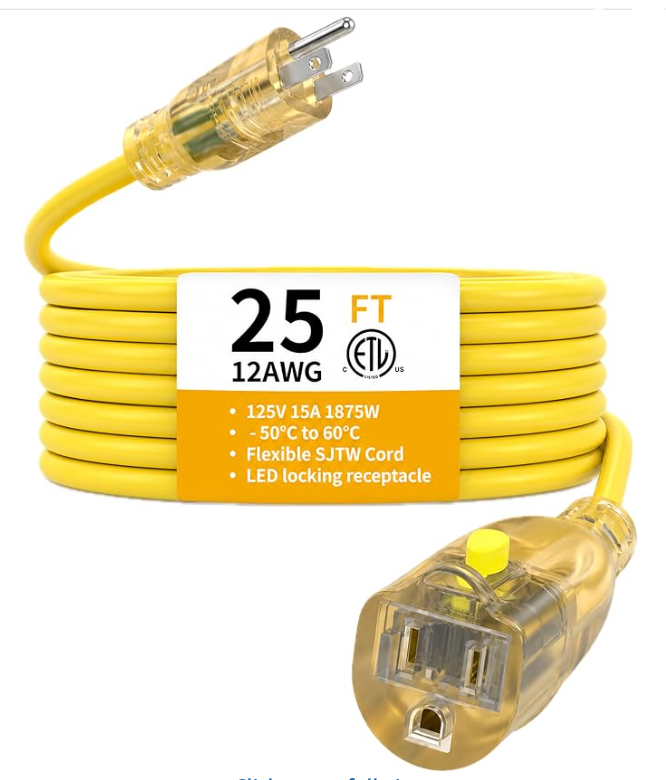
Use an outdoor-rated cord. Indoor extension cords are not made for campground exposure.
Use a grounded, three-wire cord. Do not remove a grounding pin to make a plug fit.
Match the cord to the load. The cord's amperage rating needs to meet or exceed the equipment connected to it.
Use GFCI protection outdoors. Ground-fault protection is especially important where electricity and moisture can meet.
Inspect before every trip. Replace cords with cuts, loose connections, cracked plugs, or other damage.
Do not daisy-chain extension cords. Use one cord of the correct length and rating.
Keep connections dry and out of standing water. Do not leave plug connections lying in puddles or wet grass.
Do not pinch or cover the cord. Route it where doors, tent zippers, rugs, vehicles, and foot traffic will not damage or trap heat around it.