How to Keep a Tent Dry in the Rain
Ground tarp, campsite placement, ventilation, and dry bedding for rainy-weather tent camping.
Ground tarp, campsite placement, ventilation, and dry bedding for rainy-weather tent camping.
Rain does not have to ruin a tent campsite. Start with where the tent sits, keep the ground tarp under the tent footprint, manage wet gear at the entrance, and keep enough ventilation to reduce moisture inside.
Avoid the low spot where water collects. A slightly higher, level site gives rain somewhere else to go.
The ground tarp should protect the tent floor without sticking out beyond the tent where it can collect rainwater.
Wet shoes, jackets, and other gear are easier to manage near the entrance than beside the bed.
Closing every opening can trap moisture inside. Use the tent's screened vents and openings to let damp air escape.
Before setting up, look at where rainwater is likely to run. Avoid depressions and obvious drainage paths. A level spot that sits slightly above the surrounding ground is better than the lowest flat patch at the site.
See our campground guide for more about choosing campsites.
We use a 10 x 10 ground tarp beneath the tent. The important part in rain is keeping the tarp under the tent footprint rather than leaving an edge exposed where rain can land on it and run underneath.
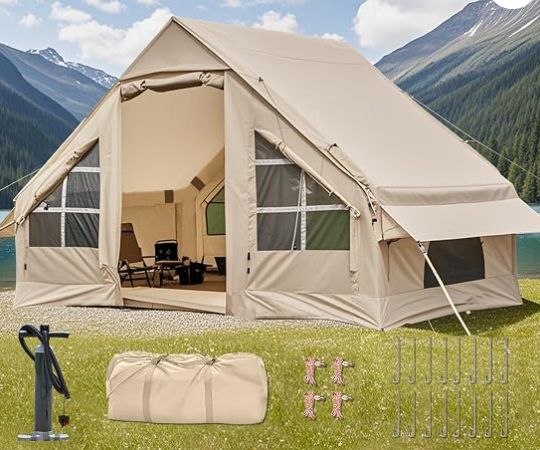
Our inflatable tent worked well through a week of rain without a separate rainfly. We kept the ground tarp tucked under the tent, kept bedding away from the walls, and used ventilation and a fan to control moisture inside.
Some tents use a separate rainfly. Ours did not need one during a week of rain.
A separate overhead rain tarp is a different thing from the ground tarp. It is not something we need under the tent, but it is useful for covering a cooking area, table, or entrance so you have a dry spot outside the tent during a long rain (see the Rain Gear We Use section below).
Before rain season starts, check the tent's seams and any stitched-through points for wear. Small gaps that were fine in dry weather can let water in once the fabric is under sustained rain.
Keep sleeping bags, sheets, pillows, and clothing away from wet shoes and rain gear. If something comes into the tent wet, keep it near the entrance until it can dry rather than carrying the water through the sleeping area.
Keep bedding, pillows, and clothing from pressing against the tent walls. Condensation can collect on the inside of the fabric and dampen anything touching it.
A waterproof outdoor blanket is a simple way to add a dry, windproof layer over bedding or gear (see the Rain Gear We Use section below).
See our camping bed setup for the bedding we use.
Rain often makes people close every window and vent. That can leave moisture from breathing and damp gear trapped inside. Keep the tent's intended screened ventilation open enough for damp air to escape while keeping rain out.
A small fan can help move damp air through the tent and reduce condensation. Aim it across the sleeping area or toward a screened vent.
For hot and humid weather, see How to Keep a Tent Cool.
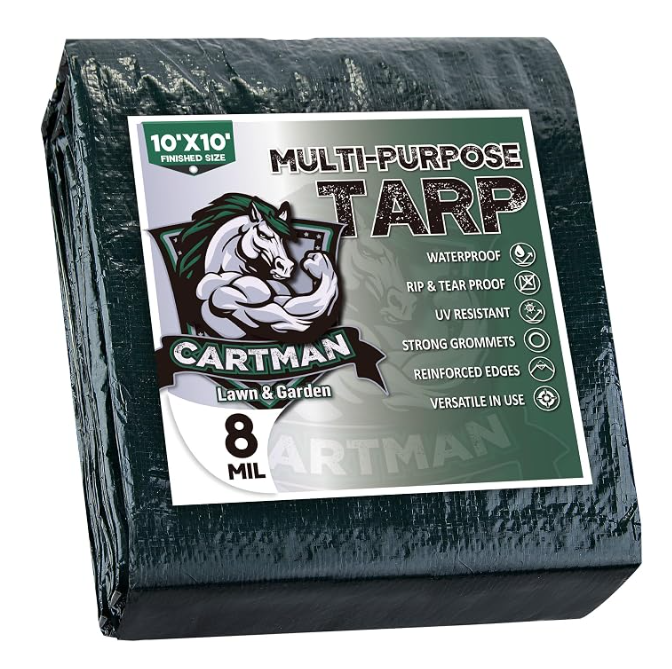
Ground protection beneath the tent for dirt, mud, moisture, and rough campsites.
View the Ground Tarp on Amazon →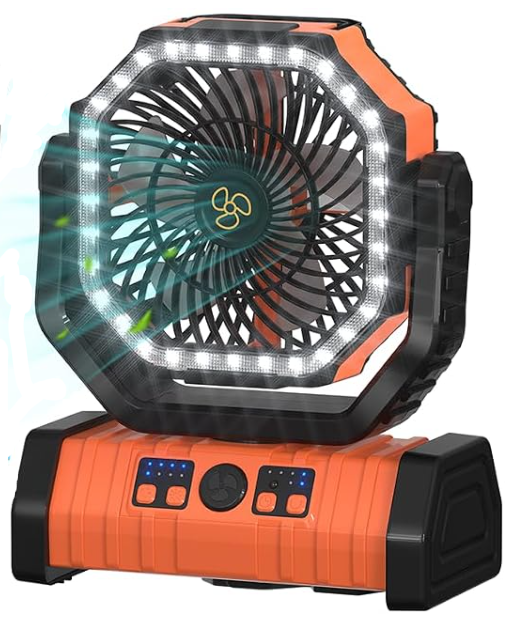
The rechargeable fan we use to move air through the tent.
View the Camping Fan on GeerTop →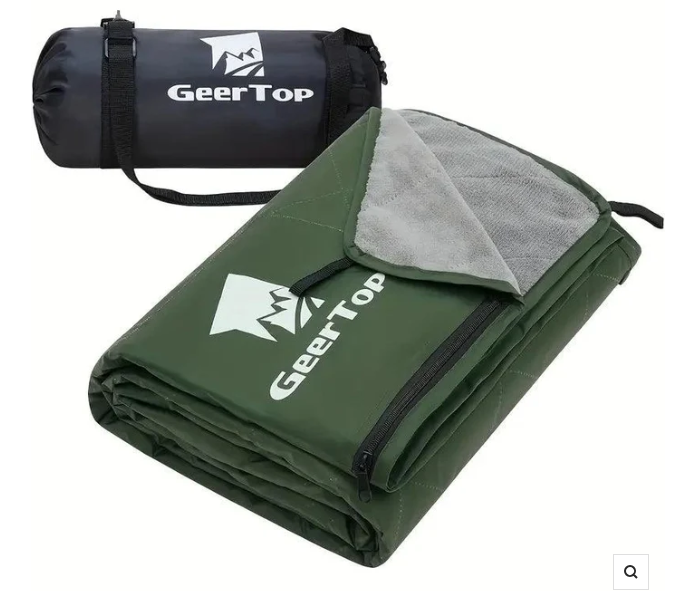
A thick, windproof blanket that blocks moisture, for keeping bedding and clothing dry and warm in wet weather.
View the Blanket on GeerTop →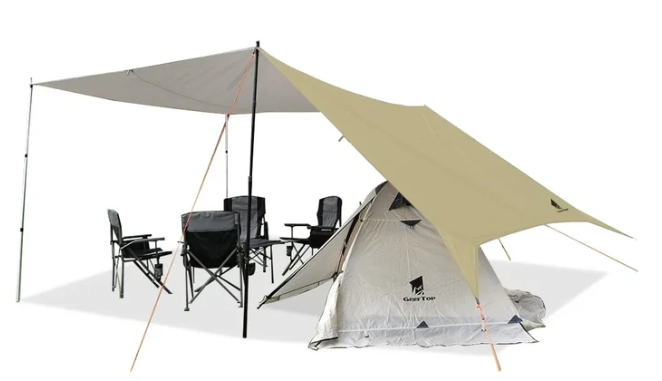
A waterproof overhead tarp for extra rain coverage over a cooking area or entrance, separate from the ground tarp under the tent.
View the Rain Tarp on GeerTop →Sometimes the only choice is to pack the tent while it is still wet. When that happens, unpack it again and let it dry as soon as practical rather than leaving it stored wet.
Camping in cold weather instead? See How to Keep a Tent Warm.
Not always. Our inflatable tent got through a week of rain without a separate rainfly by keeping the ground tarp tucked under the tent, managing wet gear at the door, and using ventilation and a fan to control moisture. Some tents are designed around a separate rainfly, so check what your tent expects.
Keep the ground tarp under the tent footprint rather than letting an edge stick out. An exposed tarp edge collects rain and can funnel it underneath the tent floor. Picking a slightly higher, level site also helps water drain away instead of collecting.
Pack it if that is the only option, but unpack it again and let it dry as soon as practical. Leaving a tent stored wet for long encourages mildew and can damage the fabric.
Keep the tent's screened vents and openings open enough for damp air to escape, even in the rain. A small fan aimed across the sleeping area or toward a vent helps move the moist air out instead of letting it settle on bedding and walls.
Glampabout © Walkabout Travel Gear. As an Amazon Associate and through other affiliate programs, we may earn a commission from qualifying purchases.