How to Keep a Tent Cool
Shade, airflow, fans, and campground power for hot-weather tent camping.
Shade, airflow, fans, and campground power for hot-weather tent camping.
A tent in direct sun heats up fast. Start with shade and airflow, then add a fan. At an electric campsite you can run larger fans or consider air conditioning, but cooling a tent with AC takes much more power than moving air with a fan.
Use a shaded campsite when you can. A separate canopy or tarp can also block direct sun from the tent.
Use screened windows, doors, and roof vents to let hot air out and outside air move through.
A fan does not lower the air temperature, but moving air makes a hot tent more comfortable and helps clear trapped warm air.
An electric site can run a plug-in fan and other cooling gear without using up the portable power station.
A shaded campsite can keep the tent cooler before you even turn on a fan. If you have a choice, pick a site with afternoon shade. If the site is exposed, a separate canopy or tarp can shade the tent.
Keep a shade tarp or canopy above the tent rather than laying it directly on the tent fabric. The air space between the shade cover and the tent helps keep the hot outer cover from sitting directly against the tent.
Open screened windows, doors, and roof vents to let hot air escape. Openings on opposite sides give warm air a way out instead of trapping it near the roof.
If there is a breeze, use the tent openings that face it. If the air is still, a fan can pull outside air in or push warm air toward an open window or door.
See Camp Comfort for the fan and other comfort gear, and Power for portable power stations.
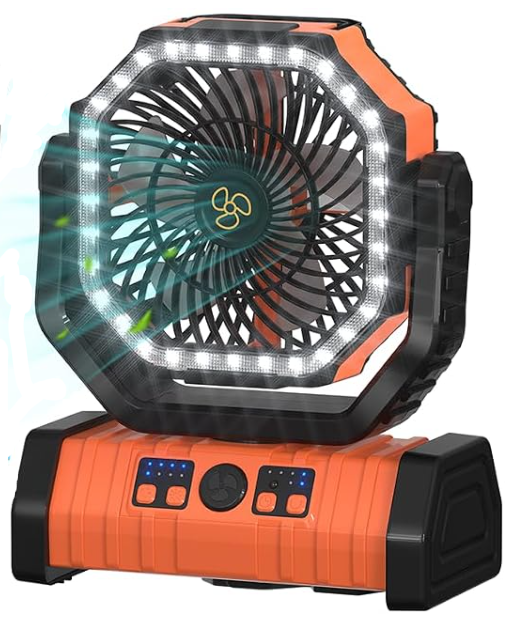
Rechargeable fan with four speeds, remote control, light, and hanging hook.
View the Camping Fan on GeerTop →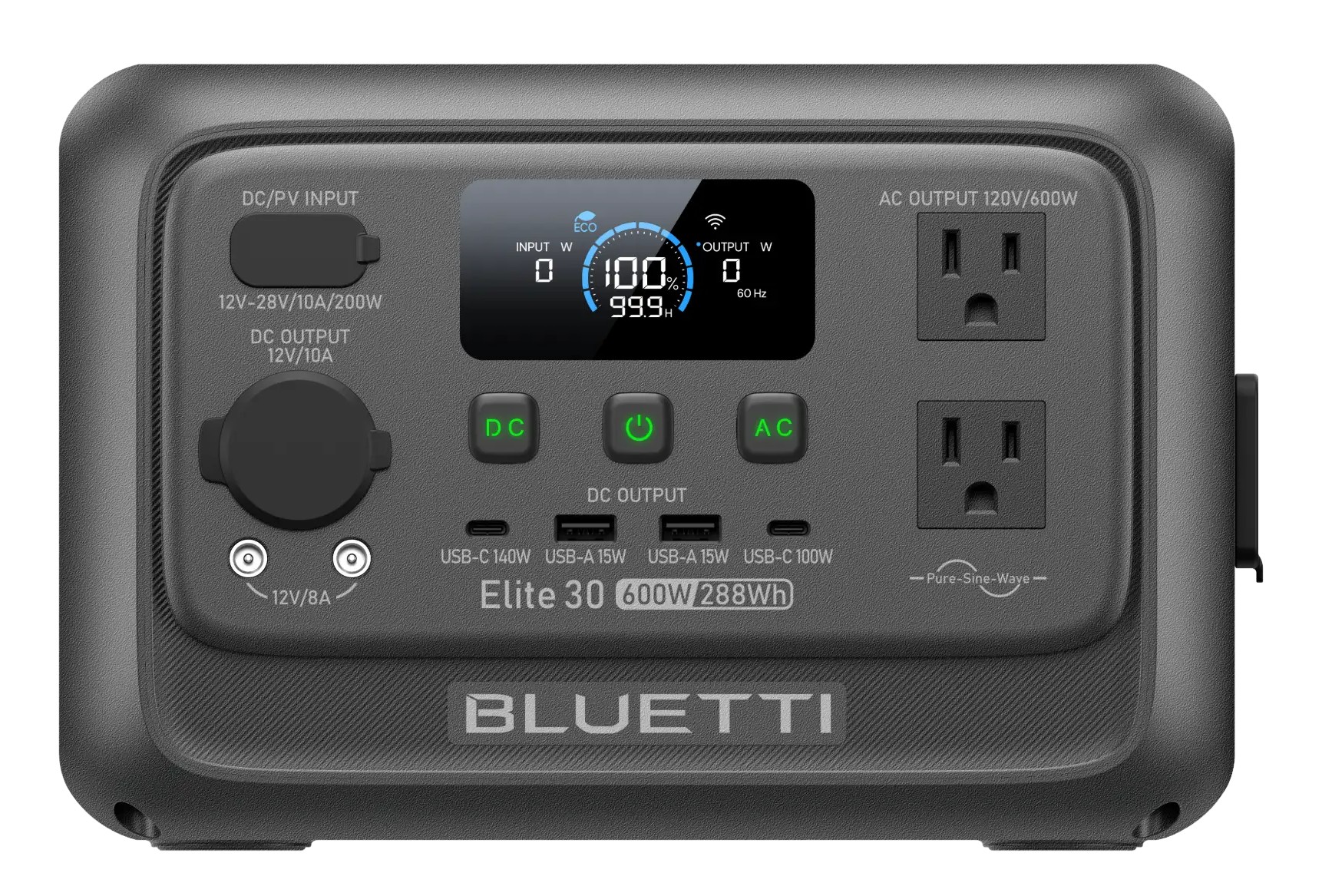
Our pick for camp power. 600W output, 288Wh capacity, compact and lightweight.
Buy Direct from BLUETTI →
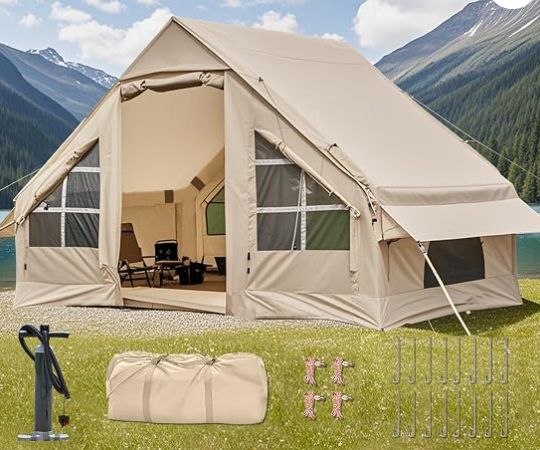
The inflatable tent used for the main Glampabout setup. It inflates by hand and provides standing room.
View the Tent on Amazon →Heavy bedding that is useful on a cold night can be miserable in hot weather. Use lighter sheets and blankets when the forecast is warm, and leave heavy sleeping bags or blankets folded back until they are actually needed.
Aim the fan across the bed rather than trying to circulate air through the entire tent. See the Glampabout bed setup for the rest of the sleeping system.
At an RV park or campground with electricity, tent campers normally use the standard 120-volt household-style outlet on the pedestal. That makes it easy to run a plug-in fan and recharge the portable power station during the day.
See Camping With Electric Hookups for the campground outlet setup, outdoor extension cords, and circuit-load basics.
For those who want true glamping with their Glampabouts, a portable air conditioner is the upgrade from a fan. It draws more power, so check the unit's electrical requirements against your campsite's circuit if you're running other high-draw appliances at the same time.
Most portable units vent hot air through an exhaust hose, so plan for an opening in the tent for it. Follow the manufacturer's instructions for the exhaust hose and drainage.
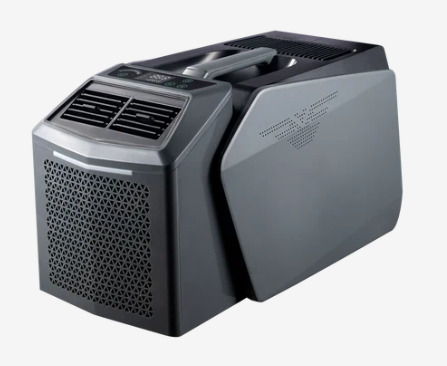
Dual-voltage (110V/220V) portable AC for electric campsites. Cools and heats, under 45dB operating noise.
View the AC on GeerTop →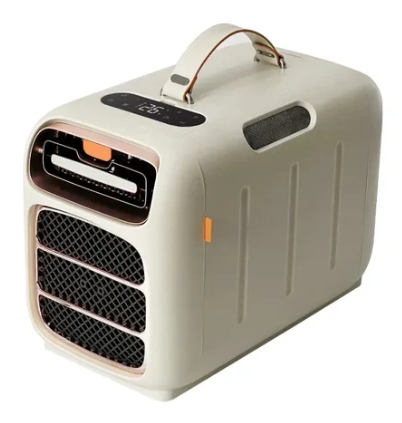
3-in-1 portable AC with digital display and remote. Cools, heats, and dehumidifies, rated for rooms up to 20m².
View the AC on GeerTop →Do not assume a portable power station that runs a fan all night will run an air conditioner all night. Check the air conditioner's running power and the power station's usable capacity before depending on battery-powered AC.
Not in the sense of lowering the air temperature. A fan moves air, which makes a hot tent feel more comfortable and helps clear warm, trapped air near the roof. For actual cooling below outside temperature, an air conditioner is what does that job.
It is possible with a large enough battery power station, but air conditioning draws far more power than a fan. Check the AC unit's running power against the power station's usable capacity before depending on battery-powered AC for more than a short run.
Units that use an exhaust hose need an opening for it, since they have to move hot air outside the tent. Follow the specific air conditioner's instructions for the exhaust hose and any drainage it needs.
Start with a shaded campsite, keep screened windows, doors, and roof vents open on opposite sides of the tent, and add a fan to move the air. That combination handles most hot afternoons without needing an air conditioner at all.
Glampabout © Walkabout Travel Gear. As an Amazon Associate and through other affiliate programs, we may earn a commission from qualifying purchases.